Student Projects
Undergraduate Program in Communication Science
Introduction
Student Project as the Core of Learning
Student Project is an essential part of the learning process in the Undergraduate Program in Communication Science, FISIP, Diponegoro University. Through projects, students not only understand theory but also apply it to analyze communication issues, formulate strategies, conduct research, and produce accountable work. This approach aligns with the Outcome-Based Education (OBE) curriculum, which places Graduate Learning Outcomes (CPL) as the main reference in designing learning and assessment.
Learning Methods
From Conceptual to Applied Practice
Learning methods are selected based on the characteristics of the targeted competencies. Courses emphasizing conceptual mastery utilize interactive lectures, discussions, and case studies to develop analytical and critical thinking skills. Practical and applied courses employ simulations, problem-based learning, and project-based learning to train students in problem-solving, collaboration, production process management, and the creation of communication works. The alignment between CPL, Course Learning Outcomes (CPMK), methods, learning experiences, and assessment is outlined in the Semester Learning Plan (RPS).
Forms of Output
A Variety of Student Works
Project outputs may take the form of research proposals, analysis reports, campaign proposals, strategic communication program proposals, event management plans, news videos, documentary films, podcasts, social media content, visual communication designs, professional photography portfolios, and many others. The form of output follows the objectives of each course. Students may also be required to present their work, explain their decisions, receive feedback, and make revisions. This sequence ensures that assessment covers both process and product, producing verifiable evidence at both the course and study program levels.
Research
Bridging Theory and Practice
In the courses of Quantitative Communication Research Methodology, Qualitative Communication Research Methodology, and Communication Research, project-based learning is used to connect theory with research practice. Students can develop research designs, formulate questions or hypotheses, develop instruments, collect and analyze data, and present findings systematically. Research projects emphasize methodological validity, academic integrity, participant protection, and accuracy of interpretation.
Multimedia Communication
Media Production and Management
In the Multimedia Communication track, projects are oriented toward media production and management. Courses such as Multimedia Storytelling, Photojournalism, Video News Production, Design Photography, Data-Driven Storytelling, Documentary Video, Podcast Production, Content Production Strategy, and Convergent Newsroom Management provide students with opportunities to develop works across various formats. The process may include topic research, concept development, scriptwriting, production, editing, distribution, and evaluation. Students learn to consider accuracy, copyright, production safety, representation of social groups, journalistic codes of ethics, and audience needs.
Strategic Communication
Data-Driven Communication Solutions
In the Strategic Communication track, projects emphasize situation analysis, goal setting, stakeholder mapping, message design, channel selection, program implementation, and evaluation. Courses such as Integrated Marketing Communication, Corporate Communication, Advertising Management, Media Planning Strategy, Public Relations Campaign, Digital and Big Data Strategic Communication, Consumer Behavior and Culture, and Political Communication and Marketing enable students to develop communication solutions for commercial, social, corporate, or political contexts. Projects are designed to be data-driven, realistic, ethical, and measurable.
Student Best Works
Student Project Portfolio of the Undergraduate Program in Communication Science, UNDIP
A collection of student portfolios from the Undergraduate Program in Communication Science, UNDIP, showcasing project outputs from both elective and required courses. Ranging from research proposals, Public Relations campaigns, to multimedia and journalism productions. Each work has gone through a process of guidance, assessment, and revision to ensure quality and compliance with academic and professional standards.
| No | Team | Title | Year | Link |
|---|---|---|---|---|
| 1 | 1. Keysha Alya Witjaksono 2. Thiara Virgietha Putri 3. Dicky Erlangga Darmawan 4. Claudia Vivian Lie 5. Tegar Ilham Hamzah | Dari Sini, Cerita Dimulai | 2025 | Link |
| 2 | 1. Indah Zuzaharani 2. Shafhah Meiska Putri 3. Krista Adelia M.S 4. Rizqo Yuhda Ilaina 5. Angwar Venus Aurelia | Jalan Menuju Disi Sendiri | 2025 | Link |
| 3 | 1. Chalvin Weslee 2. Nisrina Indriani 3. Irene Navita Soeparmo 4. Isack Josua Sasmita Siahaan 5. Andrei Seven Manuel Sirait | Belajar Bersuara | 2025 | Link |
| 4 | 1. Mufid Hanif 2. Daris Hermawan 3. Audy Aprilia 4. Salma Nurulita Kurnia Adhani 5. Fidelia Christy Helena P | Paruh Waktu | 2025 | Link |
| 5 | 1. Iqbal Rosadi 2. Zarathustra 3. Nadia Putri Mahendra 4. Sixtwomega Aprieisa 5. Ghulanaldo Rayyan | Career Paths | 2025 | Link |
| 6 | 1. Diva Faristha Nawang Wulan 2. Desi Sulistianingsih 3. Marta Alya Shinta 4. Ramadhani Putri Utami 5. Wany Syahal Sahni | Lebih dari Kata | 2025 | Link |
| 7 | 1. Ayub Susilo Hutauruk 2. Fita Seinaru Michelle 3. Aninditha Shahirah 4. Nabila Nur Khotimah 5. Farah Syifa Fauzia | Lift Path | 2025 | Link |
| 8 | 1. Bintang Ayutria Amanda Wahyu 2. Putri Anjani Rakhman 3. Safril Khusainul Fikri 4. Ilham Akbar Widyatama 5. Yolanda MartgAnjani Wijaya | Bayang Peran | 2025 | Link |
| 9 | 1. Gabriella Audrey Ivanka Dermawan 2. Jasmine Ramadhania Puteri 3. Evania Angel Callista 4. Agatha Christina Margaretha 5. Rafaya Alifahasna | Berani Bicara | 2025 | Link |
| 10 | 1. Cathlene Tanty Rahmaika Tambunan 2. Nur Fitriana Ananda 3. Rahmania Galuh Pawestri 4. Susanti | Di Sini, Suaramu Berarti | 2025 | Link |
| 11 | 1. Aprian Teja Putra 2. Azkananda Wijaya 3. Edel Martoma P 4. Yasir Arefa 5. M. Azam Ismail | Melihat Dengan Lebih Dekat | 2025 | Link |
| 12 | 1. Ainun Faizah 2. Revalina Zalfa Artamevia 3. Sasita Dewi Andini 4. Siti Aisyah 5. Zharabib Rizha Moammereta | No Regret | 2025 | Link |
| 13 | 1. Irvinda Rafii Zharfansyah 2. Rafi Oktafiandi Akbar 3. Muhammad Raihan Tambunan 4. Akbar Raushan Fikri 5. Aqila Ardra Resdi Putra | Penyesalan | 2025 | Link |
| 14 | Film Suara Yang Terpendam | 2025 | Link | |
| 15 | 1. Nabila Ma’ratunisa 2. Fathiya Nisrina Athari 3. Nikita Audia Pradita 4. Niken Yuly Prasetya 5. Fatma Ronaa Puti | Takut Bicara, Kini Juara | 2025 | Link |
| 16 | 1. Raihan Fadillah Ramadhan) 2. Amirul Syuhada Syidana 3. Lyrasava F. Shailaloka 4. Adeliskha Maritza Nandya 5. Novinda Rosdiana Putri | The Second Take (Take one failed. Take two changed everything) | 2025 | Link |
| 17 | Adinda Setya Utami | UAS PENKRE | 2025 | Link |
| 18 | Almyra Latiffah | UAS PENKRE | 2025 | Link |
| 19 | Angela Dian Nauli Manalu | UAS PENKRE | 2025 | Link |
| 20 | Athaya Khansa | UAS PENKRE | 2025 | Link |
| 21 | Avrilia Ekadhiti | UAS PENKRE | 2025 | Link |
| 22 | Azizatul Khoiriyah | UAS PENKRE | 2025 | Link |
| 23 | Haliza Ni’ma Ajrul Amalin | UAS PENKRE | 2025 | Link |
| 24 | Khalisha Salsabila | UAS PENKRE | 2025 | Link |
| 25 | Meitha Syabila Putri | UAS PENKRE | 2025 | Link |
| 26 | Meliantha S.G | UAS PENKRE | 2025 | Link |
| 27 | Melly Cendana Ssari | UAS PENKRE | 2025 | Link |
| 28 | Muhammad Fayyaz Rashyadi | UAS PENKRE | 2025 | Link |
| 29 | Nasywa Adinda Pasya | UAS PENKRE | 2025 | Link |
| 30 | Nina Tirani | UAS PENKRE | 2025 | Link |
| 31 | Nuzulus Syifa | UAS PENKRE | 2025 | Link |
| 32 | Ramadani Rhema Ardina | UAS PENKRE | 2025 | Link |
| 33 | Refiana Adista Ramadhani | UAS PENKRE | 2025 | Link |
| 34 | Rosita Febriani B | UAS PENKRE | 2025 | Link |
| 35 | Sang Khawasdyota | UAS PENKRE | 2025 | Link |
| 36 | Tita Hapsari Kusumawardani | UAS PENKRE | 2025 | Link |
| 37 | Ulayya Shafa Nurtriyani | UAS PENKRE | 2025 | Link |
| 38 | Wulan Nuricha | UAS PENKRE | 2025 | Link |
| 39 | Yolanda Putri Wulandari | UAS PENKRE | 2025 | Link |
| 40 | Adelia Sukma Hercahyani | UAS PENKRE | 2025 | Link |
| 41 | Aisyah Anindya | UAS PENKRE | 2025 | Link |
| 42 | Berliana Sekar Ramadhani El Akhsan | UAS PENKRE | 2025 | Link |
| 43 | Kalila Mumtadz | UAS PENKRE | 2025 | Link |
| 44 | Sabrina Putri Ramadhani | UAS PENKRE | 2025 | Link |
| 45 | Zefanya | UAS PENKRE | 2025 | Link |
Student Competitions
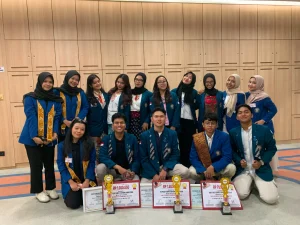
The Department of Communication Science actively encourages and fully supports Communication Science students who wish to develop their competencies in competitions at the regional, national, and international levels. The support provided may include funding, permits, and direct guidance from lecturers to help students navigate competitions more effectively. The types of competitions students participate in are diverse, though they often remain relevant to the field of Communication Science. Examples include the annual Student Creativity Week (Pekan Kreativitas Mahasiswa), Public Relations competitions, advertising competitions, and others. Below are the results of student competitions:

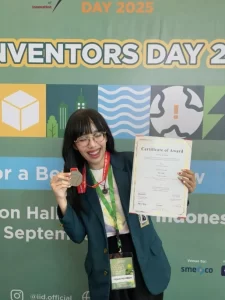
FISIP UNDIP Communication Science Student Wins Silver Medal at Indonesia Inventors Day 2025
Read More »