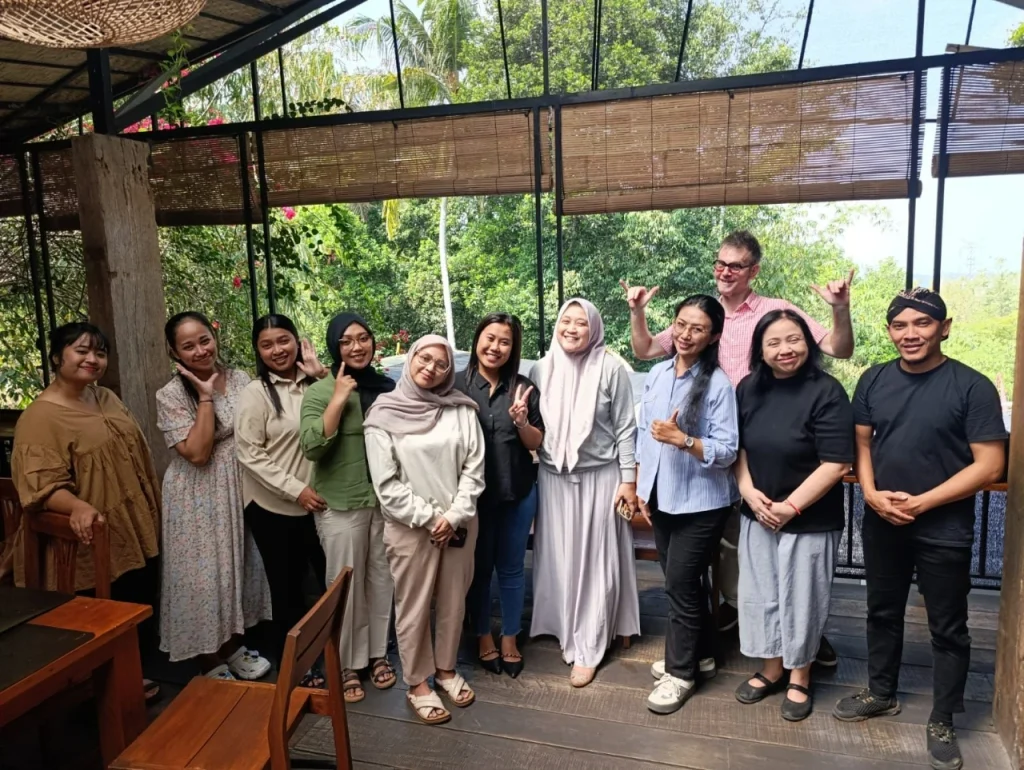

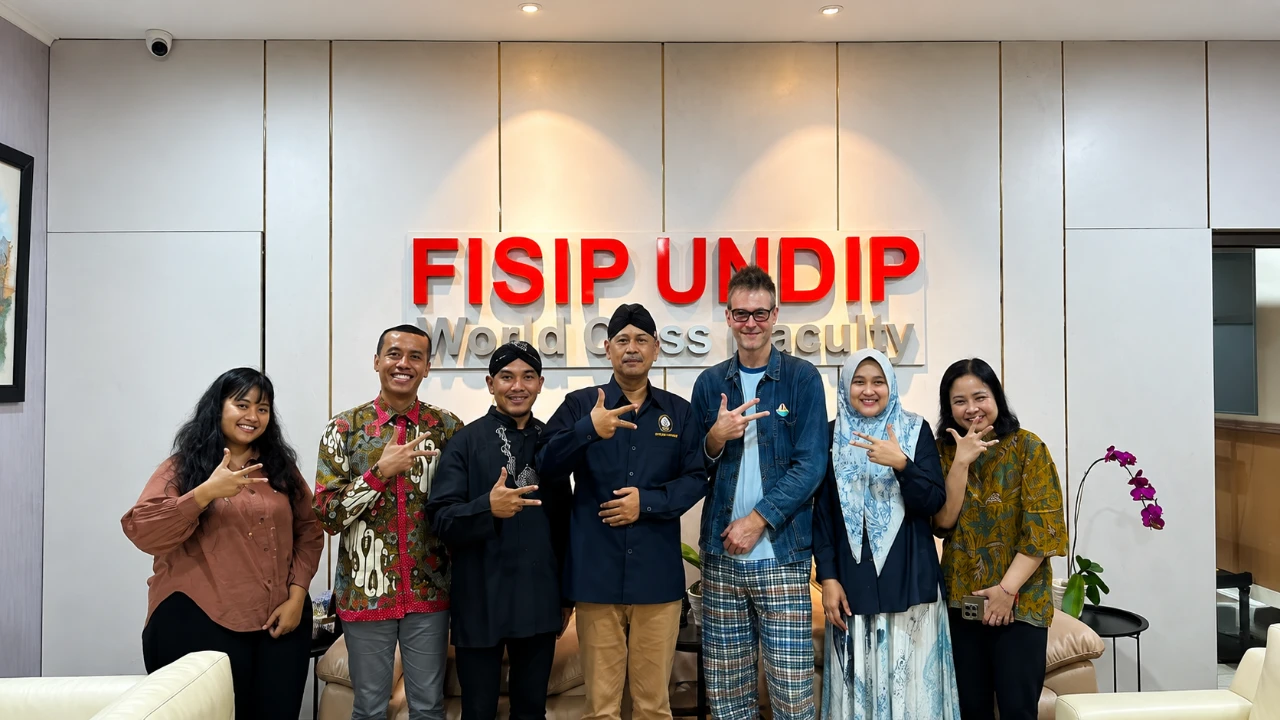
Semarang, August 24, 2026 — The Faculty of Social and Political Sciences (FISIP) at Diponegoro University is strengthening its international research collaboration through a study titled “The Social Arena Landscape of Indonesian Women Traditional Singer Performativity.” This research involves researchers from the Department of Communication Studies at FISIP UNDIP and Dr. Dag Yngvesson, Assistant Professor at the School of Humanities, University of Nottingham Malaysia.
The study, which is part of FISIP UNDIP’s 2026Reputable International Publication Research (PPIB) program, focuses on how women who work as sinden occupy, experience, and negotiate their positions within the social and cultural arena of traditional performing arts. Official FISIP UNDIP documents note that the study was conducted in Surakarta and Yogyakarta on August 21–22, 2026, with Dr. Hapsari Dwiningtyas Sulistyani, S.Sos., M.A., M.Si., serving as the principal investigator.
The presence of Dr. Dag Yngvesson, an academic from the University of Nottingham Malaysia, received a warm welcome from FISIP UNDIP. This collaboration is considered an important step in strengthening international academic networks while opening opportunities for the exchange of knowledge between Indonesian academics and international partners.
The Dean of FISIP UNDIP, Prof. Dr. Drs. Teguh Yuwono, M.Pol.Admin., expressed his appreciation for Dr. Dag Yngvesson’s visit and welcomed the research collaboration with FISIP UNDIP faculty members.
“FISIP UNDIP warmly welcomes Dr. Dag Yngvesson, Assistant Professor at the School of Humanities, University of Nottingham Malaysia. His visit presents an excellent opportunity to strengthen international academic collaboration, particularly in research areas related to communication, culture, gender, and the performing arts,” said Prof. Dr. Drs. Teguh Yuwono, M.Pol.Admin.
Furthermore, the Dean of FISIP UNDIP emphasized that the faculty provides full support for this research activity. According to him, academic activities on an international scale not only contribute to strengthening the institution’s reputation but should also have a positive impact on society.
“This event is fully supported by FISIP UNDIP. International-scale events like this, in particular, have a very positive impact on our community. This is also in line with our efforts and activities toward becoming a World-Class University, where strengthening international collaboration, conducting high-quality research, and making tangible contributions to society are crucial components in building a world-class institution of higher education,” he explained.
According to Prof. Teguh, research highlighting local cultural practices such as the sinden demonstrates that Indonesia’s cultural richness holds great potential to be developed into knowledge with global relevance. Collaboration with international scholars is also expected to broaden research perspectives while enhancing the quality and reach of UNDIP’s Faculty of Social and Political Sciences (FISIP) research findings.
Observing Sinden in the Performance Space
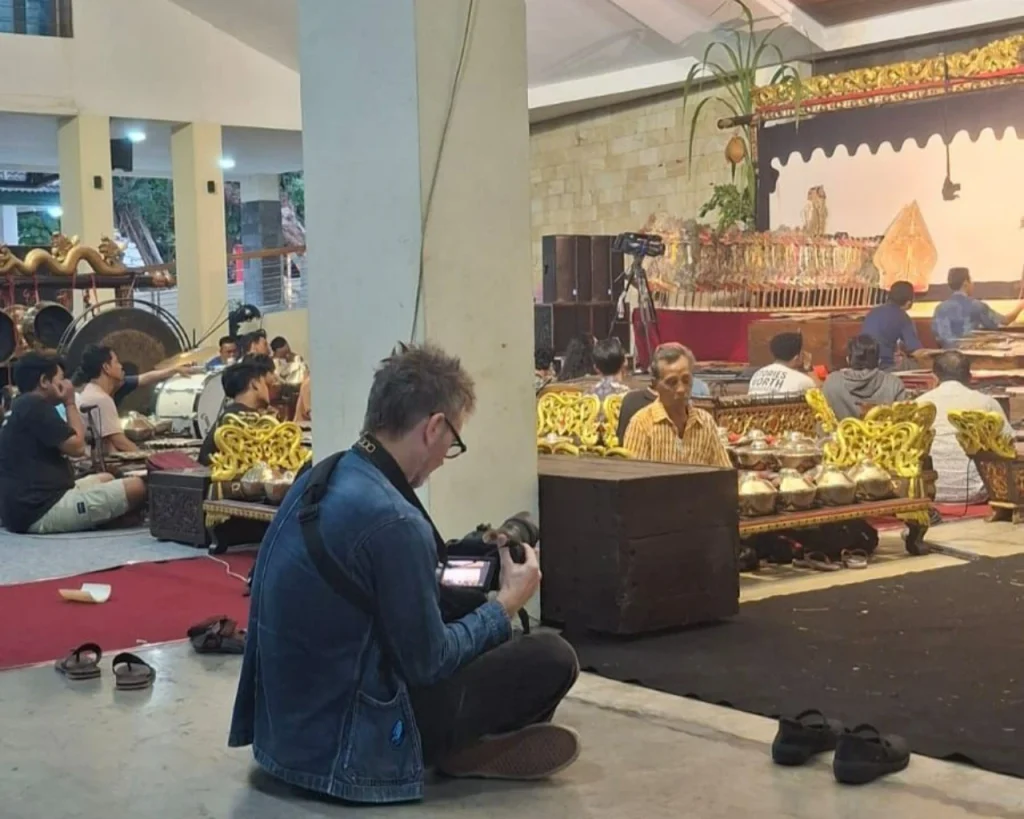
As part of the research activities, the team observed a wayang performance at the Raden Saleh Cultural Park (TBRS) in Semarang, alongside puppeteer Ki Sigid Ariyanto. The observation was conducted to witness firsthand how sinden are present and interact within the wayang performance space, as well as how women’s roles are shaped through these performance practices.
The research then continued with a study of eight sinden in Semarang with diverse backgrounds and experiences. The team also conducted research in Yogyakarta, involving six sinden from various backgrounds.
This data collection allowed the research team to examine the experiences of sinden from a more diverse perspective—not only as performing artists but also as women navigating cultural norms, social relationships, expectations regarding women’s bodies and voices, and changes in traditional artistic practices.
“This research seeks to view sinden not merely as part of a performance, but as subjects who possess experiences, voices, and agency within the social and cultural spaces in which they exist,” explained Dr. Hapsari Dwiningtyas Sulistyani, S.Sos., M.A., M.Si.
Dr. Dag Yngvesson’s participation brought an international perspective to the research process. Dr. Yngvesson has a background in Cultural Studies and Moving Image Studies, as well as over 15 years of experience as a filmmaker. His research interests include Southeast Asian cinema, media, gender studies, postcolonial studies, ethnography, and visual anthropology. He also specializes in the relationship between cinema and the performing arts.
“Research on women in traditional cultural practices is important because cultural spaces are inextricably linked to issues of gender and power relations. Through the experiences of the sinden, we can see how women fulfill their roles while simultaneously negotiating their positions within social and cultural spaces,” explained Dr. Dag Yngvesson.
This perspective is relevant to research on female sinden because the study is not merely framed as an examination of traditional Javanese art, but also as part of a broader analysis of gender, performativity, culture, media, and social change in Southeast Asia.
“Participating in this research provides an opportunity to examine Indonesian performing arts through a comparative and interdisciplinary lens. Sinden are an intriguing subject of study because they occupy the intersection of performing arts, culture, gender, and social life.”
From Local Cultural Practices to International Research
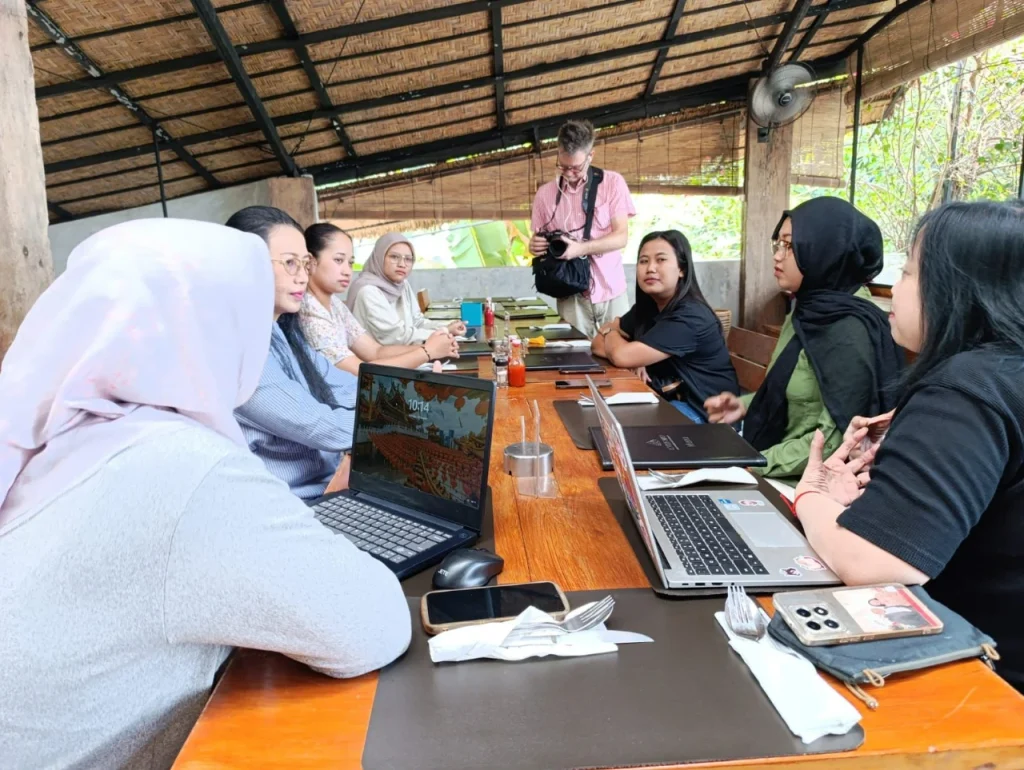
This research demonstrates how local cultural practices can serve as research subjects relevant to international academic discourse. The experiences of sinden in Semarang and Yogyakarta provide a gateway to understanding how women perform roles, construct identities, and negotiate their positions within the realm of traditional performing arts.
For FISIP UNDIP, the involvement of researchers from the University of Nottingham Malaysia is also part of an effort to expand its network of international academic collaboration. This research is expected to result in international scholarly publications while opening opportunities for joint research in the fields of communication, culture, gender, media, and the performing arts.
The 2026 UNDIP FISIP PPIB program itself targets outputs in the form of articles in Scopus-indexed international journals and/or articles in Scopus-indexed international conference proceedings.
Through this research, FISIP UNDIP not only documents and examines local cultural practices but also promotes the development of knowledge about Indonesian women and culture to be brought into academic discourse at the international level. (Naomi Putri Bahari Simeon).